Planning and Programming of Basketball Training
Training periodization represents the planning and programming of training by cycles, i.e., specific periods in the training year. The main goal of training periodization is to increase the athlete's physical fitness through the manipulation of training volume and intensity so they are ready for the challenges of modern sports. It also aims to achieve peak form, or the "peak," in the most important part of the season, as well as to avoid overtraining and injuries.
Training planning can be:
- Long-term planning: planning across the athlete's entire career.
- Medium-term planning: planning for an Olympic cycle or several annual cycles.
- Short-term planning: macrocycle, mesocycle, microcycle, and training session (individual workout).
According to sports training periodization, we distinguish three main training periods:
- Preparation period
- Competition period
- Transition period
Preparation Period
The goal of the preparation period is to raise the athlete's physical form to the highest possible level, as their performance during the competitive season will directly depend on this period. The preparation period in basketball and most team sports is divided into basic and specific phases.
In the basic phase of preparation, the main focus should be on increasing capacity, as well as strengthening the athlete's musculo-tendinous system. In this period, training volume is higher than intensity; that is, the exercises performed by the athlete involve a higher number of repetitions to prepare the cardiorespiratory and muscular systems for the challenges that follow in the specific phase of preparation and the season. The duration of the basic phase of the preparation period depends on the type of sport, the athlete's physical fitness level, and the total duration of the preparation period.
In the specific preparation period, volume decreases while exercise intensity increases. Specific exercises and movement patterns similar or identical to those in games are used. The goal is to increase the level of specific strength and conditioning, while the transition from the general (basic) phase to the specific phase must not be too abrupt.
In basketball, the preparation period is usually 6-8 weeks long during the summer months, so the basic phase is realized for about 3-4 weeks, and the rest is planned for the specific phase of preparation.
The team's preparation period for the upcoming season is unfortunately shortened, and coaches must pay attention to every segment individually. However, athletes are expected to train during the transition period (the period from the end of the season to the start of preparation), making it easier for themselves and the coaches. It is very important for the team's strength and conditioning coach to be in contact with the private coach the athlete worked with during this period. It is necessary to know how the team's head coach wants the team to play and what they require from their players—specifically, which motor abilities they want to raise to a higher level in this part of the annual plan. Usually, this involves increasing baseline strength, increasing oxygen consumption (VO2 Max), and joint mobility.
Unpredictable competitive seasons, such as in the NBA, Euroleague, and most other top leagues in the world, require adaptability in planning, making non-linear periodization the best option where plans are adjusted at the microcycle level.
A key component for success lies in the coach's ability to understand and effectively apply the methodological concepts and principles of periodization. When coaches are skilled in using these principles, they can help athletes optimize their performance, reach their full potential, and be in peak form for the most important competitions of the year. Such strategic planning also increases the athletes' resilience to injuries because periodization includes planning rest and recovery phases, which are necessary for preserving the overall health and optimal state of the athlete's body.
Coaches should have an individual approach when creating the team's plan and program for the upcoming season, depending on the demands of the sport (force-velocity ratio and metabolic demands) as well as the individual characteristics of each player. The coach should also determine movement patterns and specific demands of basketball through detailed research of the sport, while the characteristics of each player are observed through testing at the beginning of preparations. Then, testing at the beginning of each preparation phase evaluates what has been done and sets new goals for the upcoming phase.
Basketball is a game of rhythm changes. From a strength and conditioning perspective, one can observe rapid movements, acceleration/deceleration, changes of direction, as well as many jumps and landings. The dominant energy system in basketball is anaerobic, while the aerobic energy system is mainly used for recovery between high-intensity activities.
Basketball Ergogenesis
60% Alactic • 20% Lactic • 20% Aerobic
Dominant energy systems: creatine phosphate, glycogen
Mesocycles in Basketball Preparation
In the preparation period of basketball players, we distinguish several phases (mesocycles):
- Anatomical adaptation phase
- Maximum strength phase
- Explosive strength phase
1. Anatomical Adaptation Phase
Anatomical adaptation is the first phase in the preparation period, aiming to prepare the athlete's body and eliminate any muscle imbalance that could potentially cause injuries, whether it is an imbalance between extremities or in the strength of agonist and antagonist muscles of the same limb (e.g., quadriceps vs. hamstrings). Guided by the fact that muscle strength develops faster than the strength of tendons and ligaments, coaches must ensure that the anatomical adaptation phase is done correctly and lasts long enough, without transitioning too quickly to the next phase of the preparation period.
| Training Parameter | Value in Anatomical Adaptation Phase |
|---|---|
| Phase Duration | 2-4 weeks |
| Load | 12-20 repetitions (decreasing to 6-8 throughout the phase) |
| Number of Exercises | 6-8 |
| Number of Sets | 2-4 |
| Workout Duration | 40-60 minutes |
| Rest Between Sets | 30-120 seconds |
| Weekly Frequency | 2-4 sessions |
Table 1. Training parameters in the anatomical adaptation phase
Depending on the situation and the time available for the preparation period, a hypertrophy phase can be planned, especially for post players. Also, by developing the strength and hypertrophy of the shoulder girdle muscles, primarily the rotator cuff, shoulder injuries (which are common in basketball) can be avoided. If there is not enough time for a separate hypertrophy phase, coaches can plan exercises for the hypertrophy of specific muscle groups in other phases of the general preparation period, as well as at the end of strength training in the season, after the main exercises. Of course, athletes' hypertrophy training must be sport-specific and focused on large muscle groups (prime movers), which differs from bodybuilding hypertrophy where only a specific isolated muscle is trained. Hypertrophy development is also important for easier force gains in later phases of the preparation period, especially in the explosive strength phase.
2. Maximum Strength Phase
The maximum strength phase is a period where general preparation gradually transitions into specific training, volume drops while intensity increases, and the exercises used are sport-specific (having a higher positive transfer). The loads used in this phase are 70-80% of 1RM in the initial weeks, and also 80-90% of 1RM. The point of the maximum strength phase is to strengthen the athlete's body so that strength can be converted into explosive strength in the next phase of preparation. Research has shown that physically stronger athletes can achieve a greater increase in explosive strength, which is one of the most important motor abilities for achieving elite results in basketball.
| Training Parameter | Value in Maximum Strength Phase |
|---|---|
| Intensity | 70%-80% and 80%-90% of 1RM |
| Number of Exercises | 2-5 primary exercises, 2-3 auxiliary exercises |
| Number of Repetitions | 3-6 (for 70%-80% 1RM) and 1-3 (for 80%-90% 1RM) |
| Number of Sets | 3-8 sets |
| Rest Between Sets | 2-5 minutes for primary, 1-2 minutes for auxiliary |
| Total Sets in Workout | 16-24 sets |
| Weekly Frequency | 2-4 sessions |
Table 2. Training parameters in the maximum strength phase
3. Explosive Strength Phase
In the explosive strength phase, most exercises performed are intense and sport-specific. Athletes spend most of their total training time on the court practicing for the season, so training must be adapted to account for cumulative fatigue, which can otherwise lead to overtraining. The explosive strength phase should contain a 2+1 or 3+1 mesocycle, depending on the available time, while plyometrics, agility, acceleration-deceleration, and change-of-direction exercises are integrated into the microcycle. Before athletes transition to the explosive strength phase, they must have already developed the body's cardiorespiratory and musculo-tendinous capacity, so explosive strength exercises can be performed without injury risk. It is also very important to demand proper exercise form from athletes. It is especially important to technically train young athletes correctly; if incorrect automated movement patterns are formed in youth categories, it is very difficult to correct these habits later.
| Training Parameter | Value in Explosive Strength Phase |
|---|---|
| Phase Duration | 3-6 weeks |
| Load (1RM) | Cyclic: 30-50% • Acyclic: 30-80% |
| Number of Exercises | 3-6 exercises |
| Number of Repetitions | Cyclic: 3-6 • Acyclic: 3-5 (for 50-70%), 1-3 (for 70-80%) |
| Number of Sets | 3-6 sets |
| Rest Between Sets | Cyclic: 2-3 min • Acyclic: 3-5 min |
| Contraction Velocity | Explosive |
| Weekly Frequency | 2-4 sessions |
Table 3. Training parameters in the explosive strength phase
One of the most common mistakes of coaches and athletes is transitioning too quickly to the specific phase of preparation before basic preparation is fully completed. This exposes the athlete to injury risk and causes a rapid decline in form once the competitive part of the season starts.
Competition Period
The competition period should aim to achieve high results in matches, creating the best conditions for reaching seasonal goals. The basketball competitive season consists of one to several games per week, so training focuses on maintaining the fitness achieved during the preparation period until the winter break, where a period of several weeks can be used for mini-preparations.
Workouts during the basketball season are based on maintaining strength, explosive strength, agility, and coordination, alongside injury prevention and post-game recovery sessions. To maintain form, it is sufficient to perform one strength workout and one explosive strength workout per week depending on the situation, while endurance is maintained through games for players with sufficient playing minutes. Players who do not get enough playing time can have one endurance workout in the weekly microcycle to compensate and stay in shape. Agility, coordination, and speed drills can be performed in the gym at the start of practice while the CNS is fresh, as part of the warm-up, for a short duration of about 20 minutes. Since basketball players can jump more than 100 times during a single game, additional plyometric workouts are not necessary during the season.
Transition Period (Recovery)
The transition phase should serve to allow athletes to recover physically and mentally from a demanding season. Complete cessation of physical activity for more than 2 weeks is not recommended to prevent detraining, i.e., a drastic drop in the athlete's physical performance. During this period, activities not related to basketball, such as swimming or jogging, can be practiced, while bodyweight strength exercises can be done a few days a week.
Under ideal conditions, several weeks should be spent in each preparation phase with recovery weeks before transitioning to the next phase, which clears accumulated fatigue and allows the athlete to enter supercompensation, while form is maintained in-season depending on the game schedule. Working in basketball, I often did not have enough time to implement all preparation phases, so by testing at the beginning of preparations and each phase, I determined the athletes' strengths and weaknesses and spent more time on areas that needed the most improvement, which are crucial for success in basketball. Therefore, when designing a training plan for the competitive season, specific characteristics depending on the concrete conditions of the training environment must be taken into account alongside general periodization rules.
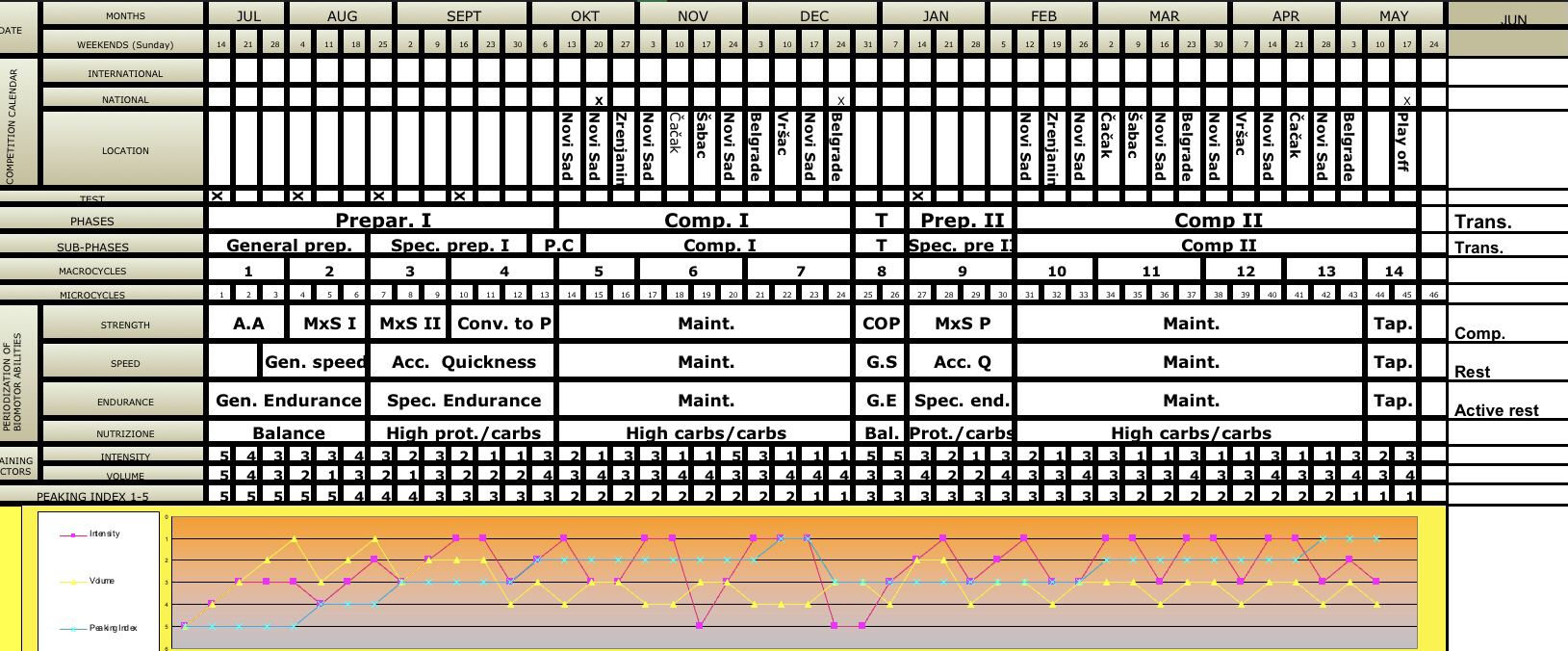
Figure 1 shows a periodized training plan for a basketball season with sufficient time for each preparation phase. As I mentioned earlier, in modern sports it often happens that the coach does not have time for every phase, so they will determine what the team needs to work on most based on testing.
Working with Youth and Recovery
When working with children and young athletes, it is very important to build a good foundation for the rest of their careers. Bodyweight strength exercises, learning proper jumping, landing, change-of-direction, and running techniques, as well as weightlifting techniques, should be a priority as this creates the prerequisites for a properly directed and long-lasting career. In youth training, a number of exercises should target coordination and spatial awareness, but also build proper movement patterns through ball play, which will be perfected later. Competitions and achieving high results should definitely take a back seat for children, as early specialization often leads to a premature end to a career.
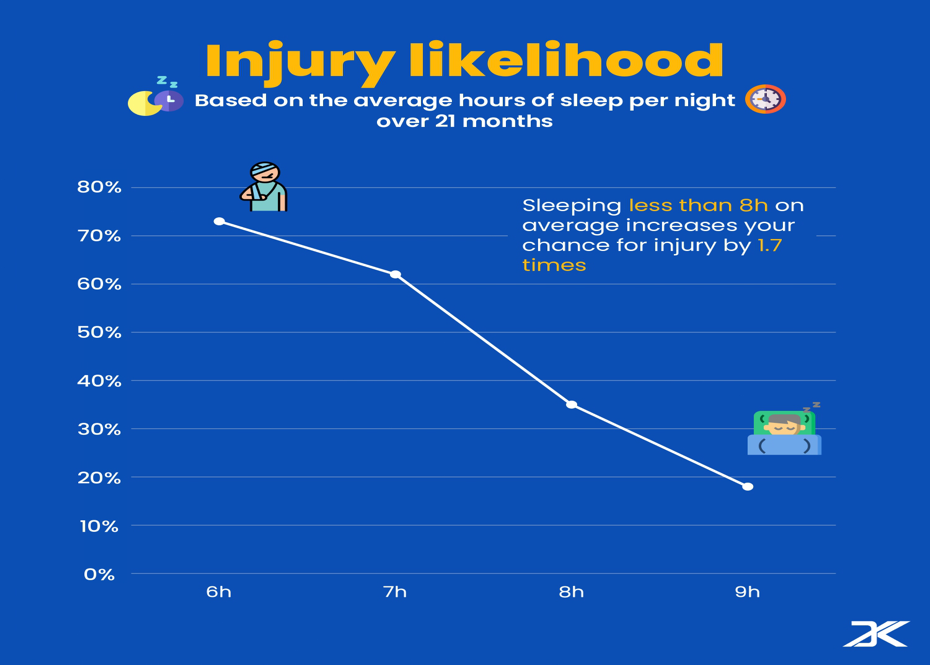
The demands of modern sports are high, and athletes are the tools for achieving high club results. Coaches and the athletes themselves must be aware of the importance of proper recovery after strenuous training and competitions. There are various methods of athlete recovery, but the two most important are sleep and nutrition. If an athlete gets quality sleep of at least 8 hours a day, alongside a diverse diet rich in carbohydrates, proteins, and fats (in a 4:1:1 ratio), they can regenerate the body and preserve or restore glycogen stores in the muscles and liver. If they do not take care, athletes can enter a state of overtraining or even get injured, risking the continuation of their career.