Knee Injuries in Basketball
Due to the nature of the sport and the movement patterns basketball contains, such as acceleration, deceleration, jumps, landings, and quick changes of direction, knee injuries are a common occurrence among basketball players. Aside from the knee, the next most frequent basketball injuries are ankle and shoulder injuries, while the three most common knee injuries involve the anterior cruciate ligament (ACL), meniscus, and patellar tendon. Returning an athlete to competitive form requires not only restoring strength and mobility of the extremities but also connecting the entire kinetic chain into sport-specific movements. The knee joint absorbs forces during landing but also transfers forces applied to the ground.
Knee injuries are more frequent in female athletes due to bone structure, primarily the pelvis and hips, but also in young athletes in puberty whose bone structures haven't finished developing, so improper loading can lead to injury.
If the knee joint collapses medially towards the ankle into the so-called valgus position, an injury can occur. It's especially dangerous for the athlete if the internal rotation of the hip is combined with foot pronation while the knee joint is in the valgus position. However, from a practical standpoint, the knee joint will often be in a valgus position during a change of direction in basketball, but if the biomechanics of movement are good, along with the strength of specific muscle groups, the athlete will not have problems executing the movement. Gravity, friction, and air resistance act on athletes during movement activities. Through the eccentric contraction of the leg muscles, forces are distributed to prevent injury.
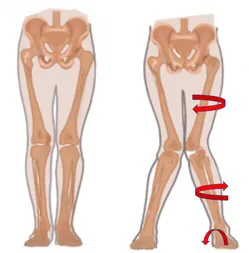
Muscles whose eccentric function is necessary for force absorption:
- Hip: Glutes and hip rotators
- Knee: Quadriceps, glutes
- Ankle: Soleus
It is very important to know the causes or mechanisms of injury occurrence because only in this way can injuries be treated and healed.
Jumper's knee, i.e., inflammation of the patellar tendon, is a condition that frequently occurs in basketball players during their careers. With improper treatment, the inflammation can become chronic and can lead to a more serious problem while playing basketball.
Possible Causes of Jumper's Knee
- Muscle imbalance: A difference in strength between extremities or in the strength of agonists compared to antagonists. Basketball players have a dominant or jumping leg, and it's natural that by using one leg more, they develop greater strength. But if the strength of one leg compared to the other exceeds 15%, it can indicate a problem and subsequent injury.
- Weakness of specific muscles or muscle groups: Leg abductors, such as the muscles of the gluteal region, help absorb forces during landing, while the hamstrings are also important for stabilizing the knee joint.
- Biomechanics of movement: Proper technique for jumps, landings, running, changing direction, and other movement patterns is crucial for preventing potential injuries as well as for proper energy efficiency during movement. The impact and absorption of forces during these rapid movements is key in sports. It is very important to teach young athletes the proper technique for these movements because if this isn't done and they form an incorrect automated action in the CNS, it's very difficult to correct it later.
- Overuse: Or excessive use of the same muscles and joints. The demands of elite sports are high, but coaches should use science and proper load dosing—manipulating volume and intensity—to create good conditions for their athletes. By using recovery sessions and entire microcycles, as well as recovery methods, overuse injuries can be avoided. The main goal of every coach must be a healthy and long-lasting career for every athlete.
- Reduced joint mobility: Reduced ankle dorsiflexion as well as reduced hip mobility can be causes of patellar tendon inflammation. In the case of reduced mobility in these joints, there is poor force distribution during landing, so the knee joint bears a much greater load, and after some time, certain problems will likely appear.
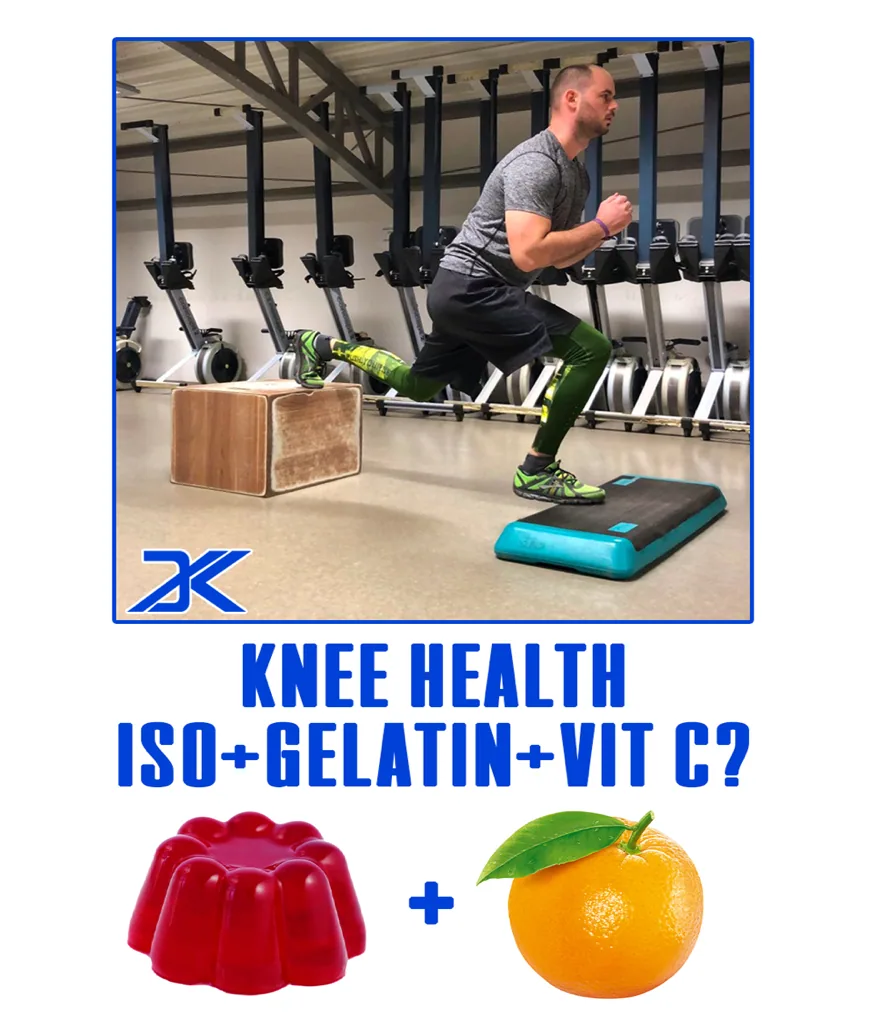
Jumper's knee can be successfully treated with isometric exercises involving the knee joint. A protocol that can be used to prevent the onset as well as to recover from an already existing jumper's knee using isometric exercises:
- Short training episodes of 5-10 minutes several times a day
- Isometric contraction of 20-45 seconds per position, 3-5 sets
- The interval between training episodes for tendons should be 6 hours
This method can be used for other tendons in the body, not just the patellar tendon. Tendons consist of collagen and elastin, so collagen supplementation (bovine gelatin), combined with isometric exercises, would certainly help recover a damaged tendon.
Eccentrically oriented exercises can be painful for athletes, while isometric exercises are safe and effective, and they can also reduce pain in a short period of time. In certain situations, if the pain becomes chronic, exercises alone will not solve the problem, and therapy must be sought.
The knee joint has an outer and inner meniscus, whose role is to enable the smooth functioning of the femur and tibia. The menisci also serve to absorb loads and evenly distribute weight across the joint. Meniscus injuries usually occur during sudden turning or abrupt stopping. The meniscus is an important segment of the knee joint. If an injury occurs, it can be treated with physical therapy or surgery, depending on the severity of the injury, i.e., the size of the meniscus tear. Due to the nature of the sport and the movements it requires, basketball can also cause degenerative changes to the cartilage in the knee, mostly in susceptible athletes. Some of the causes can be previous knee injuries to the athlete. Cartilage injuries are successfully treated with medication, injections, physical therapy, or, in the most severe cases, surgery.
Glucosamine sulfate is found in joint cartilage, and studies related to glucosamine supplementation have shown that patients experience a significant reduction in symptoms. Glucosamine sulfate is a chondroprotector that alters chondrocyte metabolism, stops degenerative cartilage damage, and helps rebuild it.
The hip joint, although alongside the shoulder joint the most mobile joint in the body, is not frequently injured in basketball, and one of the reasons is that it's surrounded by strong gluteal muscles. However, if basketball players have reduced hip mobility, it can manifest as excessive load on the knee, leading to inflammation or injury during their career. Reduced mobility also results in the inability to perform certain exercises. It especially occurs in older athletes who often neglect mobility exercises and then have certain problems in the later stages of their career. Looking at the human body and its joints, we can state that the ankle joint must be mobile, the knee joint must possess stability, the hip joint mobility, the lumbar spine must possess stability, while the shoulder joint should have certain mobility.
Core strength and stability, besides being very important for achieving good results in basketball, play a significant role in injury prevention. Core muscle weakness is usually reflected as pain in the lumbar spine but can also reflect in lower extremity injuries. Poor stabilization, control, and coordination of core muscles can lead to knee injuries in athletes, especially ACL injuries. Studies have shown that lower back pain can be linked to ligament injuries in athletes. Core strength and stability are therefore of immense importance for all athletes, especially for maintaining a stable body position during the dynamic movements the sport requires.
Epiphyses are the ends of long bones where they connect with adjacent bones; injuries often happen in young athletes due to incomplete fusion, developing the so-called Osgood-Schlatter syndrome. Pain and pressure in the knee occur due to strenuous and improperly dosed training. If the poor application of training methods continues, this can result in extreme cases and serious injuries such as a tendon tear or tibia fracture.
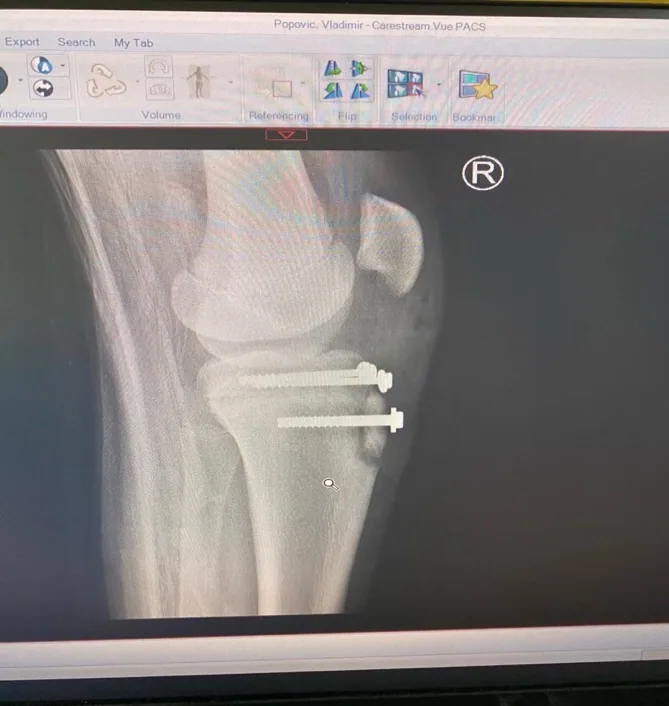
Working with young athletes and teenagers, I encountered two serious injuries, namely tibia plateau fractures. In the initial stages after surgery, the athlete is not able to perform many exercises, so electrical stimulation of the leg muscles, primarily the quadriceps, can be a good solution to prevent the muscles from completely atrophying. Later, when starting to use exercises, it is very important to pay attention to the quality of execution because athletes tend to compensate for the movement using uninjured muscles.
Rehabilitation Phases for Serious Knee Injuries (e.g., ACL)
By alternating high and low-intensity loads, using proper exercise technique, and objectively monitoring the athlete's condition, we can act preventively. However, if a serious knee injury occurs, rehabilitation takes place in 4 phases:
- Protection of the injured tissue
- Restoring muscle strength and joint mobility
- Restoring the functionality of the injured part
- Returning to competitive form (sport-specific training)
Depending on the type and severity of the injury, each phase requires a certain period of time. A mistake coaches often make is prematurely ending the initial phases of rehabilitation, while on the other hand, returning to the court prematurely without going through the final phase of rehabilitation can be dangerous for the athlete. Skipping the final phase means the athlete is not ready for the demands of the sport, i.e., the movement activities that involve expressing force and speed, which happen in a sport like basketball, and they can represent a new risk of injury to the newly recovered tissue.
The first phase primarily refers to protecting the knee from further injury. Depending on the type of injury, this can mean some sort of immobilization.
In the second phase, the goal is to restore the strength and mobility of the injured joint. Initially, bodyweight exercises can be used, depending on the type and severity of the injury, and the exercises must be executed slowly and controlled to avoid compensation by other muscles or muscle groups. Restoring full range of motion is of great importance, both in the injured knee joint and the ankle joint. In the initial training sessions of the second phase, isolation exercises for a specific muscle can be done, for example, the quadriceps, while later the entire kinetic chain is included in the movement to build strength and restore mobility. Athletes might not be able to perform many exercises if the injury is serious, so electrical muscle stimulation can be used. To progress to phase three of rehabilitation, some criteria must be met:
- Full range of motion (may lack 10% of full knee flexion)
- Bodyweight single-leg squat performed with good movement control
- Less than 30% difference in muscle strength of the injured leg compared to the uninjured one
Phase three is an extension of phase two and includes returning function and introducing sport-specific movements. First of all, running is introduced in this phase, as well as exercises where the athlete must change the direction of running, of course performed with special caution and under special supervision. It is very important for the athlete to use proper running and change-of-direction technique. In this phase, the athlete should practice force-absorption exercises such as box jumps and deceleration, i.e., stopping from a run. Landings at first can involve both legs, and then progression is made to single-leg landings, of course not from a great height. From week to week, the athlete should increase the intensity and speed of running, as well as agility exercises, but they must not rush; if phase three is ended prematurely, there is a risk of re-injury. To progress to the final phase of rehabilitation, the following criteria must be met:
- Full range of motion in the joint
- 15% or less difference in strength between the injured and uninjured leg
- Good control during running as well as during change-of-direction exercises
- Less than 15% difference in maximum running speed compared to the pre-injury state
Phase four is the athlete's return to the court, i.e., full return to the competitive form they had before the injury. Exercises used in this phase are sport-specific, involving a wide range of movements characteristic of the sport and engaging the entire kinetic chain during movement. In this phase, exercises on different surfaces, stable and unstable, can be used, which will also involve proprioceptors in the movement. Athletes join team practices where they will be exposed to contact play, so in addition to gaining control while applying various movement patterns characteristic of the sport, they will also regain their confidence. In the final phase, athletes must undergo testing to objectively see if they are capable of fully returning to the court. In addition to strength, agility, and balance tests, tests such as single-leg hops must be performed to directly see the difference compared to the uninjured leg as well as the difference compared to the pre-injury state. To allow the athlete a full return to competition, the following criteria must be met:
- Less than 10% difference in unilateral hops of the same leg compared to the pre-injury state
- Return of full control during acceleration, deceleration, and change-of-direction exercises, as well as running speed
- 10% or less difference in strength between the injured and uninjured leg
It is very important in what environment the athlete recovers from an injury. Besides support and encouragement from the coach, athletes must have the support of their family, teammates, and their environment to return properly mentally. Sometimes in the process of returning an athlete from injury, support is the most important thing, often the only thing missing. It also happens that after successfully completing injury rehabilitation, a psychological trauma remains that haunts the athlete and prevents them from performing at the expected level. Talking to a sports psychologist as well as the aforementioned support from the environment are then of particular importance for a successful return to competition.
In training episodes aimed at developing explosive strength and vertical jump, such as plyometric training, maximum concentration and maximum effort must be demanded from the athlete. The athlete must be fresh and rested to approach plyometrics because if exercises are done while the athlete is fatigued, the desired effect will not be achieved, and the fatigue will ruin the technique, cause a loss of focus, and potentially lead to injury. For plyometric training to be successful, the athlete should not have more than 180 ground contacts per training episode, 1-3 workouts per week; for young and inexperienced athletes, a much smaller number. Anything more will not lead to the desired results but can produce a counter-effect. Also, to approach a high number of jumps, a certain base strength of the musculo-tendinous system is required, which is provided in the general preparatory phase. Guided by the fact that muscle strength develops faster than the strength of tendons and ligaments, coaches should make sure that the anatomical adaptation phase is done correctly and lasts long enough, not moving too quickly to the next phase of the preparatory period.
During the basketball season, coaches often make the mistake of prescribing additional plyometric workouts in the microcycle, thus contributing to overuse knee injuries. Basketball players have over 100 jumps during a game, so additional training will only contribute to the appearance of acute or chronic pain in the long run. Motor skills such as strength and explosive strength must be trained during the season, but too many additional conditioning workouts and plyometric training are not recommended for players who play enough minutes.
Through the proper use of exercises and training loads, one can act preventively and reduce the number of knee injuries. For example, ACL injuries largely depend on strength but also on the proper functioning of the medial hamstring muscles, semitendinosus and semimembranosus, which attach to the tibia. Therefore, exercises like the hamstring curl as well as dynamic exercises like the kettlebell swing are of crucial importance not only for increasing performance but also for preventing knee injuries. Movement activities related to basketball are fast and explosive. If the development of force is not worked on in practice to simulate situations on the court, the athlete will at the very least not be competitive in competitions, and injuries can easily occur.
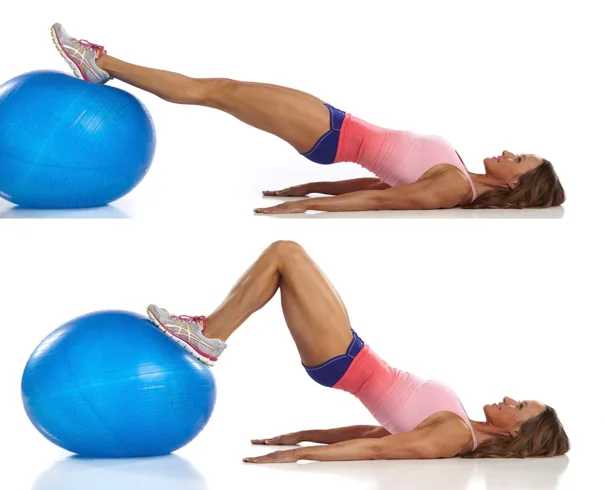 Hamstring curl exercise
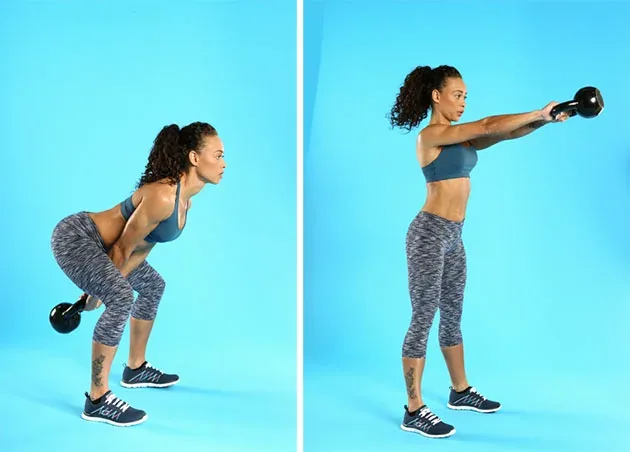 Kettlebell swing
The demands of modern sports are high, and athletes are the tools for achieving high club results. Coaches and the athletes themselves must be aware of the importance of proper recovery after strenuous training and competitions. There are various methods of athlete recovery, but the two most important are sleep and nutrition. If an athlete has quality sleep of at least 8 hours a day, as well as a diverse diet rich in carbohydrates, proteins, and fats (in a 4:1:1 ratio), they can regenerate the body and preserve, i.e., restore glycogen stores in the muscles and liver. If they do not take care, athletes can enter a state of overtraining or even get injured, risking the continuation of their career. Also, by using training periodization, manipulating volume and intensity throughout the annual training plan, athletes can reach peak form in the most important part of the competitive period and avoid injuries. By using regenerative training episodes in the microcycle as well as regenerative microcycles in the mesocycle, the athlete's body can recover and allow for supercompensation.
In working with children and young athletes, it is very important to build a good foundation for the continuation of their career. Bodyweight strength exercises, learning proper jump, landing, change-of-direction, and running techniques, as well as weightlifting techniques, should be a priority because this will create the prerequisites for a properly directed and long-lasting career. In training young athletes, a certain number of exercises should be aimed at developing coordination and spatial awareness, but also through playing with the ball to create proper movement patterns that will later be perfected. Competitions and achieving high results should definitely take a back seat for children, and early specialization often leads to a premature end of a career.
Another important thing in sports, which coaches often overlook, is the structure of the training session. Training should consist of introductory, main, and final parts. Skipping or not dedicating enough time to warming up is a very big problem because athletes will then move into the main part of the training unprepared for the demands of the basketball game where force and speed alternate. During warm-up, it is necessary to raise body temperature and heart rate, then activate the muscle groups needed for executing basketball movements; the third part of the warm-up is increasing the range of motion in the joints, and the final part is the activation of the neuromuscular system using extensive plyometrics.
As a coach, I unfortunately often have the opportunity to work with athletes who are injured or have been injured. By testing at the beginning of work with a team or an athlete, insight will be gained into the current physical condition but also insight into potential deficiencies that could lead to a player's injury. Then, testing at the beginning of each preparation phase evaluates what has been done and sets new goals for the upcoming phase. One of the most common cases is certainly a strength imbalance of the dominant (jumping) leg compared to the non-dominant one, which in the future will mean the appearance of injury problems. A frequent case is an imbalance in the strength of agonists and antagonists of the same leg, primarily a difference in quadriceps strength compared to the hamstrings. I also encounter poor movement biomechanics, poor technique of basic movements such as running, jumping, and landing. All this can indicate a future problem if not corrected in time. Coaches should have an individual approach when creating the team's plan and program for the upcoming season, depending on the demands of the sport (force-velocity ratio, and metabolic demands) as well as the individual characteristics of each player. The coach should determine movement patterns and specific demands of basketball through detailed research of the sport, while characteristics and deficiencies of each player are observed by testing at the beginning of preparations. Carelessness and lack of concentration are also frequent causes of injuries; focus must be demanded from players, especially when performing high-speed exercises.
Strength and conditioning coaches and basketball coaches should dose the load in agreement, and be in constant contact with physiotherapists and doctors working in the club, especially if it involves an athlete who has a certain history of injuries.